
Baillie Scott House


“We very much admired the way this listed house has been sensitively refurbished and retrofitted for the 21st century while retaining its beauty and significance as one of a small number of surviving Baillie Scott houses in Cambridge. The result is a highly liveable house, full of character and with a fabric-first approach to the retrofit, demonstrating what can be done with a listed building.”
Judges citation for Bailley Scott house – Highly Commended for the David Mackay Award for Engineering and Sustainability in the Cambridge Design and Construction Awards 2026

The project has been Highly Commended for the David Mackay Award for Engineering and Sustainability in the 2026 Cambridge Design and Construction Awards
Liz King Architects worked in close collaboration with WFDH Architects on the complete renovation, thermal upgrade and extension to this interesting and unique Grade II Listed house by the notable Arts and Crafts Architect M H Baillie Scott.
The clients found the house to be cold and draughty through the winter months, and the fabric had suffered from various roof leaks in recent years. It was too small for the family with three lively boys. A conservatory had been bolted-on to the north facing rear of the house, providing additional space, but it was too cold to use in the winter. In addition, the spatial arrangement of the house did not suit the Clients’ preferred pattern of life. The family living and dining rooms were remote from the kitchen. The Clients wished to make alterations to the house in order to achieve warm, light-filled, connected and inclusive family living spaces and additional accommodation.




The Clients understood that Arts and Crafts houses are difficult to extend while retaining the character and spirit of the original design. A previous planning application for the replacement of the conservatory with a large extension (designed by others) had been rejected as it was not in keeping with the Grade II Listed house.
We decided instead to focus on carefully remodelling the original house to meet the clients’ needs, while respecting the original design for the house by Baillie Scott. The kitchen was connected with the dining room and the main family room was re-orientated towards the sun on the south side of the house. Consideration has been given to accessibility and inclusive design throughout. This includes removing small and cramped rooms to allow for more generous circulation, level thresholds where possible, and improving the provision for sanitary accommodation on both floors of the house. In conjunction with this, the rear conservatory was removed and a separate single storey added, designed to continue the architectural character of the original house. The extension provides a family games room, study, shower room and guest bedroom. It replaces an asbestos roofed garage and creates a more attractive aspect from the rear garden, without dominating or detracting from the Listed house.


The original house was comprehensively renovated including high levels of insulation added to all thermal elements (attic, walls, glazing and floors). The original horizontally sliding sash and casement windows were retained but reglazed with vacuum double glazing to provide a high level of thermal insulation and draught-elimination. The outdated gas boiler was replaced with a renewable heating system with air source heat pump, and a whole house mechanical ventilation heat recovery system has been installed.
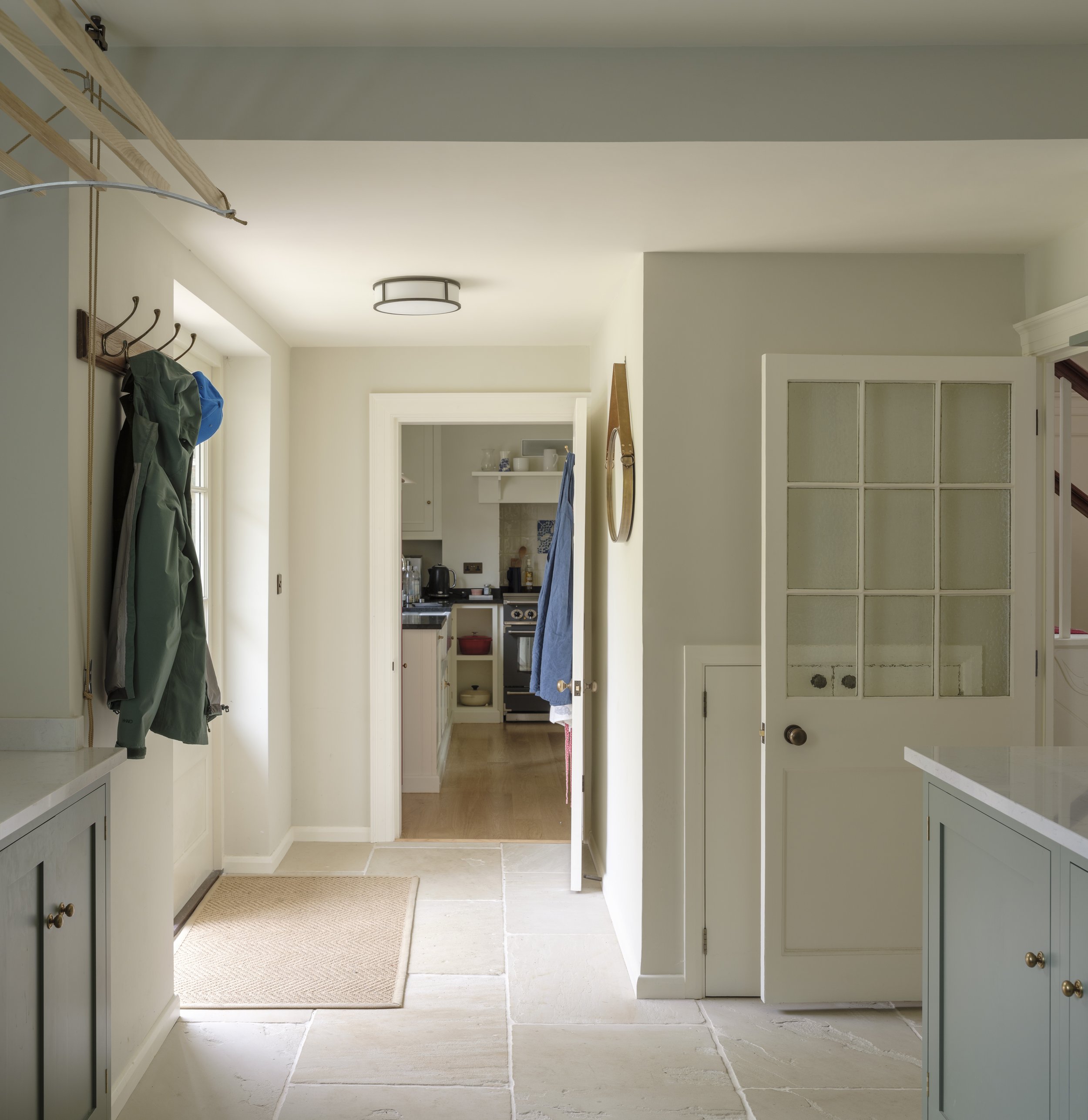
Subtle architectural changes to the Listed house include the re-instatement of a central roof lantern over the stair and landing (removed at some point during the 20th century, probably due to leaks and rotting timber), construction of a rear porch with sustainably sourced timber columns and new thermally efficient traditional timber french patio doors to improve access to the garden, removing a wall at the main entrance hall to create a larger vestibule with storage for cloaks, shoes and improved access.
The entrance court has been enhanced with a new brick screen wall, York stone paving and a bespoke wrought-iron style gate leading to a covered walkway into the rear garden, including secure covered bicycle parking and level threshold access to the new annexe.
Photography by Matthew Smith Architectural Photography